She Donated a Kidney to Save Her Boss’s Life — Then Claims She Was Punished for Taking Time to Recover
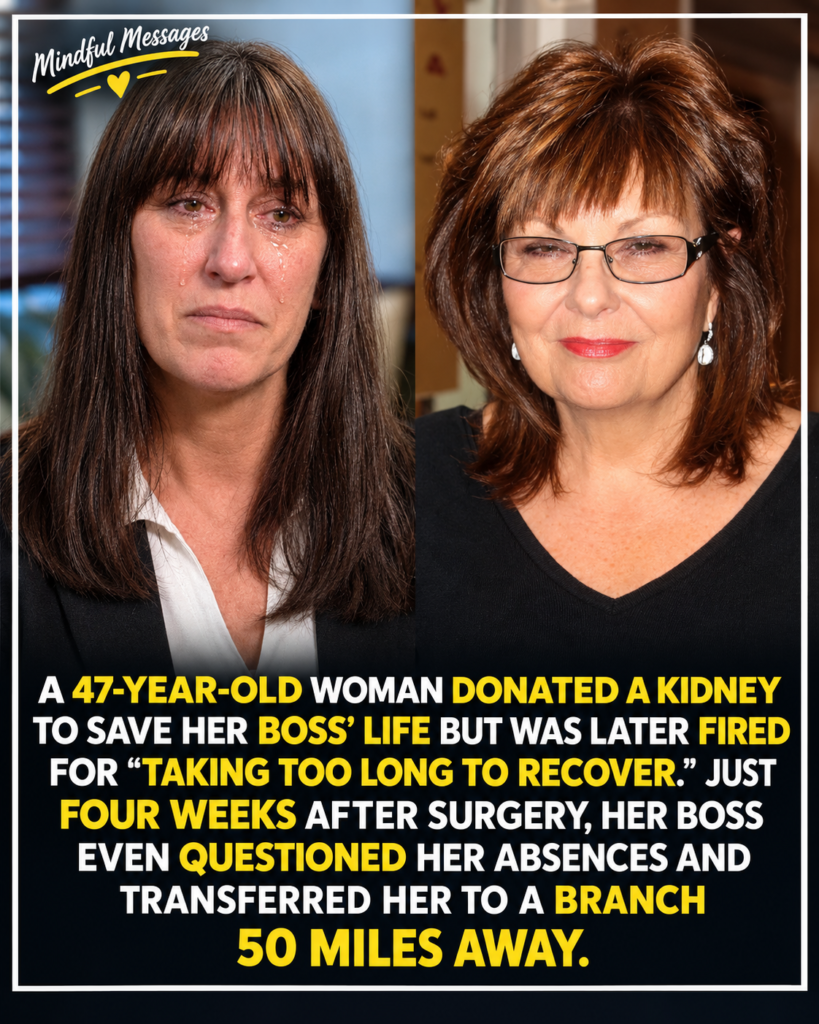
Sometimes, the people who make the greatest sacrifices for others receive the least kindness in return. The story of Debbie Stevens, a 47-year-old woman from Long Island, New York, became a painful example of how an extraordinary act of generosity can be followed by an unexpected personal struggle.
In 2011, Debbie worked for Atlantic Automotive Group, where her boss, Jackie Brucia, was facing a serious health crisis. Brucia needed a kidney transplant, and Debbie decided to do something that would change both their lives.
She offered to donate one of her kidneys.
In-Article · 300x250 / Responsive
It was an incredible gesture, especially considering that the two women were not a direct medical match. But Debbie’s willingness to help opened the door to a process known as a kidney paired donation chain.
A Gift That Could Save a Life
Because Debbie and her boss were not compatible donors and recipients, the transplant could not happen directly between them. Instead, Debbie’s kidney was given to another patient who needed a compatible organ. In return, another donor in the chain provided a kidney that could be transplanted into her boss.
This system made it possible for several people to receive life-saving transplants through a series of carefully coordinated donations.
For Debbie, the decision was about helping someone who needed a second chance at life. Donating a kidney meant undergoing major surgery, accepting medical risks, and taking time away from her everyday responsibilities.
She went through with it, and the transplant chain helped her boss receive the kidney she needed.
In-Article · 300x250 / Responsive
But while the operation represented hope for one person, Debbie’s own recovery would soon become a difficult chapter.
The Recovery That Changed Everything
In August 2011, Debbie underwent surgery to donate her kidney. Like any major operation, the procedure required time to recover from, and she reportedly experienced complications that made returning to normal life more difficult.
She needed additional time away from work as she dealt with the physical effects of surgery.
According to the discrimination complaint she later filed, however, her absence became a source of conflict with her employer.
Debbie alleged that she was criticized for missing work, questioned about her recovery, and accused of seeking special treatment. She also claimed that she was eventually transferred to another branch approximately 50 miles from her home.
Imagine going through a major operation to help save another person’s life, only to find yourself facing pressure at work while still trying to heal.
What should have been a period focused on recovery reportedly became a source of stress and uncertainty.
Debbie’s situation raised an uncomfortable question: how could someone who had made such a personal sacrifice end up feeling unsupported when she needed understanding herself?
From Donor to Employee in a Workplace Dispute
The conflict did not end with the transfer.
In April 2012, Debbie was fired from her position. The company reportedly cited performance-related reasons, while Debbie maintained that the treatment she experienced was connected to her medical leave and the circumstances surrounding her kidney donation.
She subsequently filed a discrimination complaint, bringing attention to the difficult situation she believed she had faced.
The story attracted public interest because of the unusual circumstances: Debbie had volunteered to undergo surgery that helped save her boss’s life, yet she later found herself in a dispute with the same workplace.
It is important to distinguish between the allegations and the outcome. Debbie’s claims were part of a legal complaint, and the case was eventually settled out of court in 2014. A settlement does not necessarily mean that either side admitted wrongdoing.
Still, the story left many people questioning how employees recovering from serious medical procedures should be treated and whether acts of kindness are sometimes taken for granted.
A Story That Raises Important Questions
Debbie’s experience is a reminder that generosity can come with real personal costs. Donating a kidney is not a small gesture. It involves surgery, medical follow-up, physical recovery, and a decision that can affect the donor for the rest of their life.
Her story also highlights the importance of compassion in the workplace. Employees are people, not machines. They can become ill, experience complications, and need time to recover. A moment of vulnerability should not automatically become a reason to treat someone without dignity.
Of course, every employment dispute has its own facts, and the claims made in this case should be understood in the context of the complaint and its eventual settlement.
But one part of the story remains especially striking: Debbie was willing to undergo major surgery to give another person a chance at life. During her own recovery, she believed she did not receive the understanding she needed.
Her decision to donate a kidney was an act of extraordinary generosity. Whatever happened afterward, that act should not be forgotten.
Because kindness should never be mistaken for weakness, and helping another person should never mean that your own well-being no longer matters.